Devlog · 7 November 2026
Day one: from a map of ideas to a playable coral survey
Every time I talk about ocean science, people ask the same questions. What is down there? What is life on a ship like? And, the one I find most interesting: how does any of it come back to land, into a classroom or a museum? Today I started building a game that answers that last question by letting you live it.
The idea in one loop
A curator at a big ocean museum has to rush off. A class is on its way, and the topic is outside Mio's expertise. Mio is the museum's young lead researcher, and you are her research partner. She checks who in her phone is awake, in which time zone, and calls a friend in the field. Then you jump in: you become the science intern on a boat, do the real task, and bring the data back. Together you build a station, and when the class arrives, you play one of the kids.
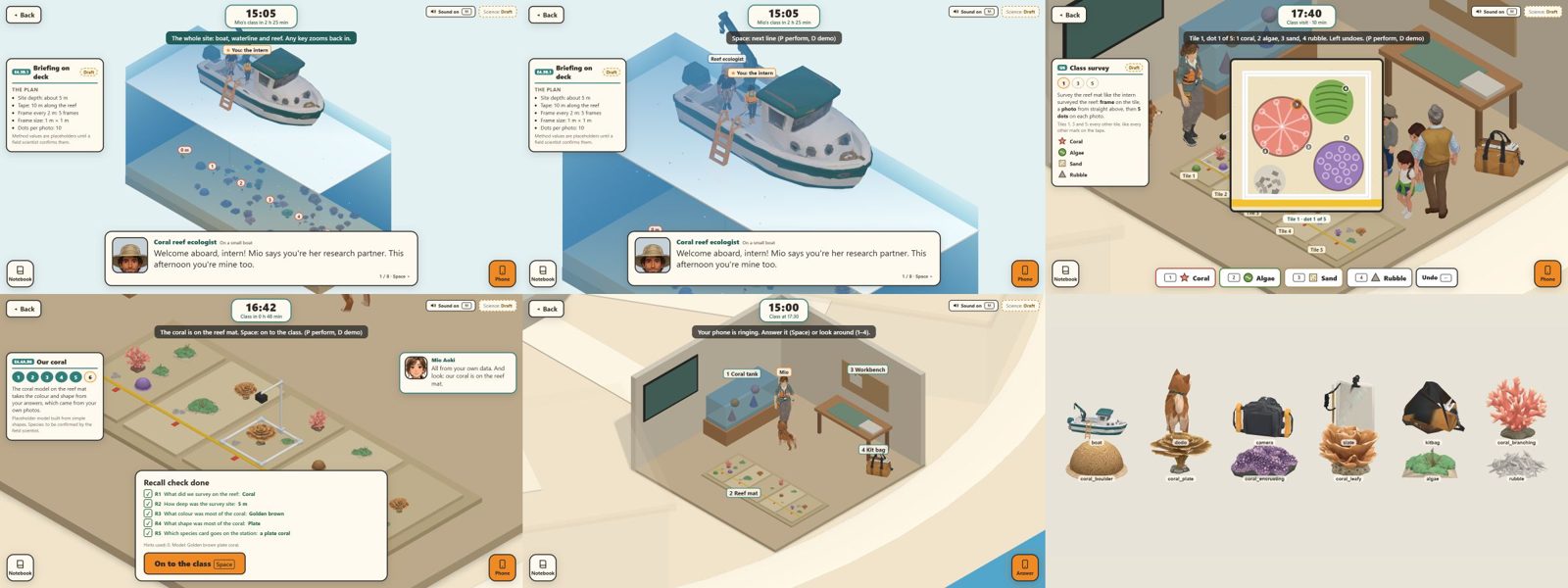
Mapping it before building it
Before any code, the whole game went onto one big board: every scene, choice and mistake has a code, like E4.3B.5 for "take the photo, straight down, level, same height". It sounds fussy, but it meant I could point at a card and say "this, but different".
The coral question
The first playable episode starts with a question from a class of 9-year-olds: is coral a plant, an animal or a rock? The answer comes from a real method reef scientists use: lay a tape along the reef, photograph a frame of reef every couple of metres from straight above, then put dots on each photo and count what is under them. Coral, algae, sand or rubble. The number you get is the reef's coral cover.
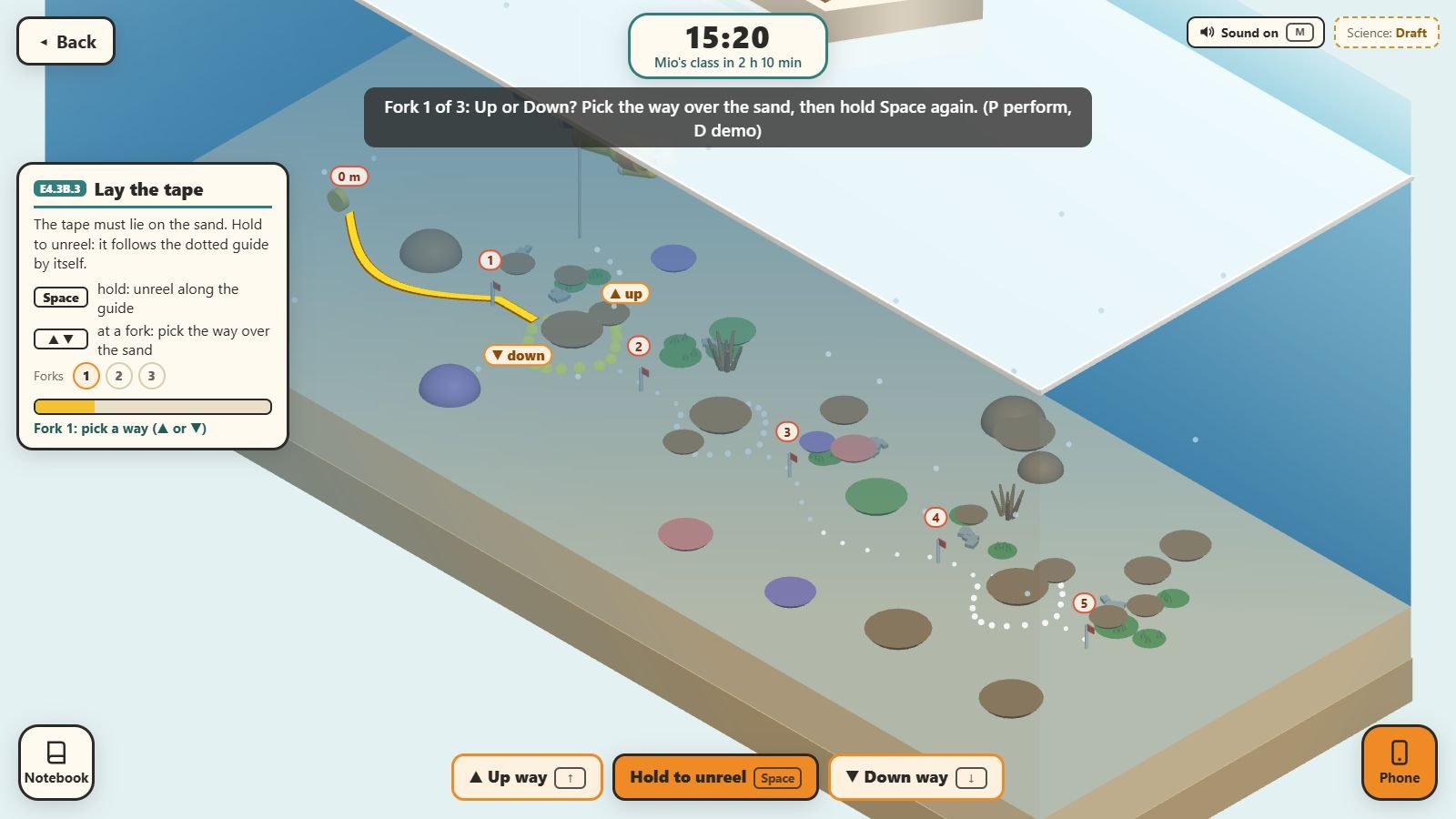
The first version of the tape step was far too hard. My AI partner played it like a new player would and lost eighteen minutes of game time bumping into coral. Now the tape follows the guide by itself and you only choose the way at three forks. Small fix, big difference.
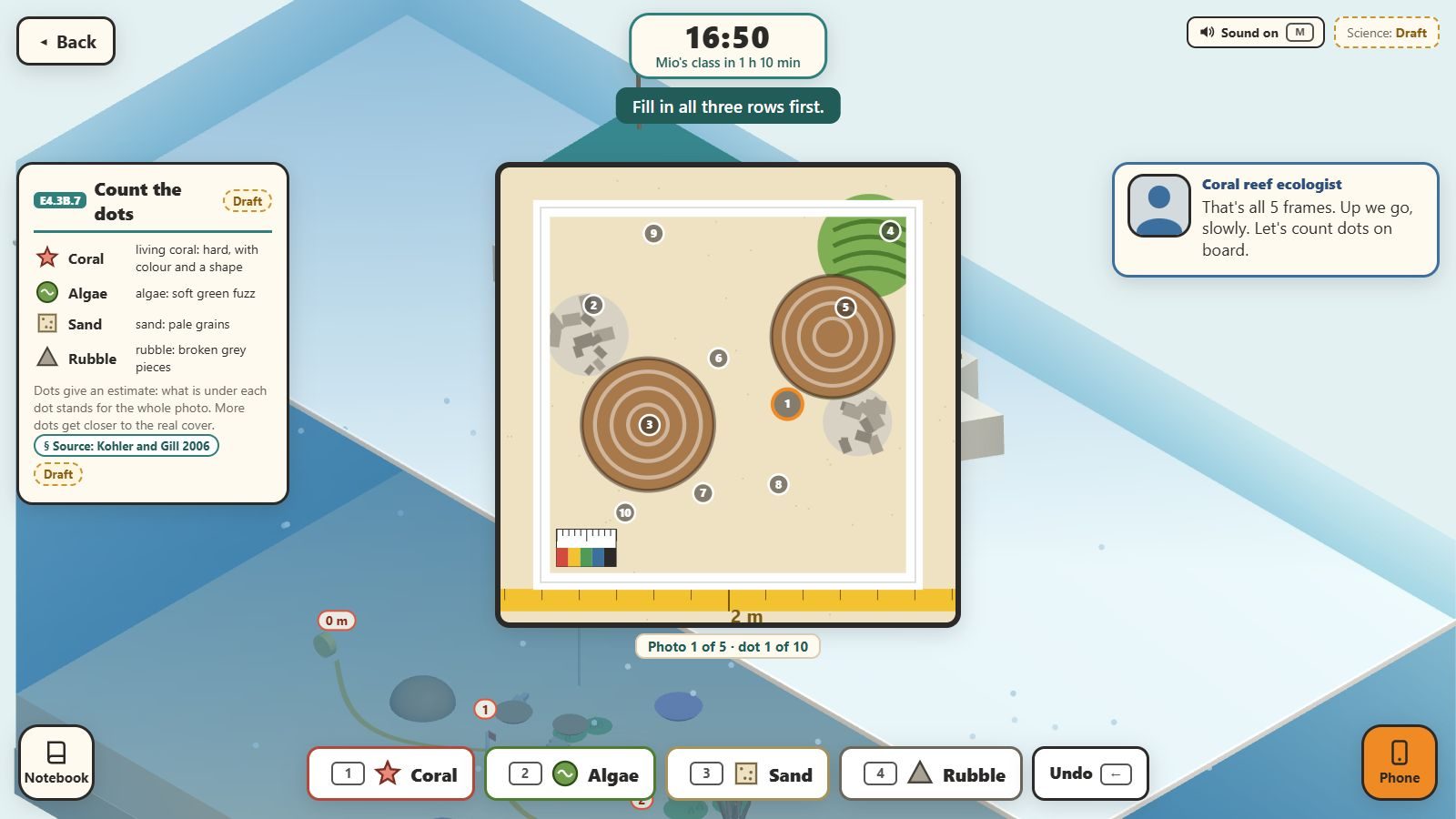
Mistakes are the lesson
Nothing in this game fails you. A tilted photo, a forgotten scale card or a fishing net in the dive bag costs a few minutes and gets a short, kind explanation from the scientist about why it matters. That is how it works in the field too.
Real 3D characters
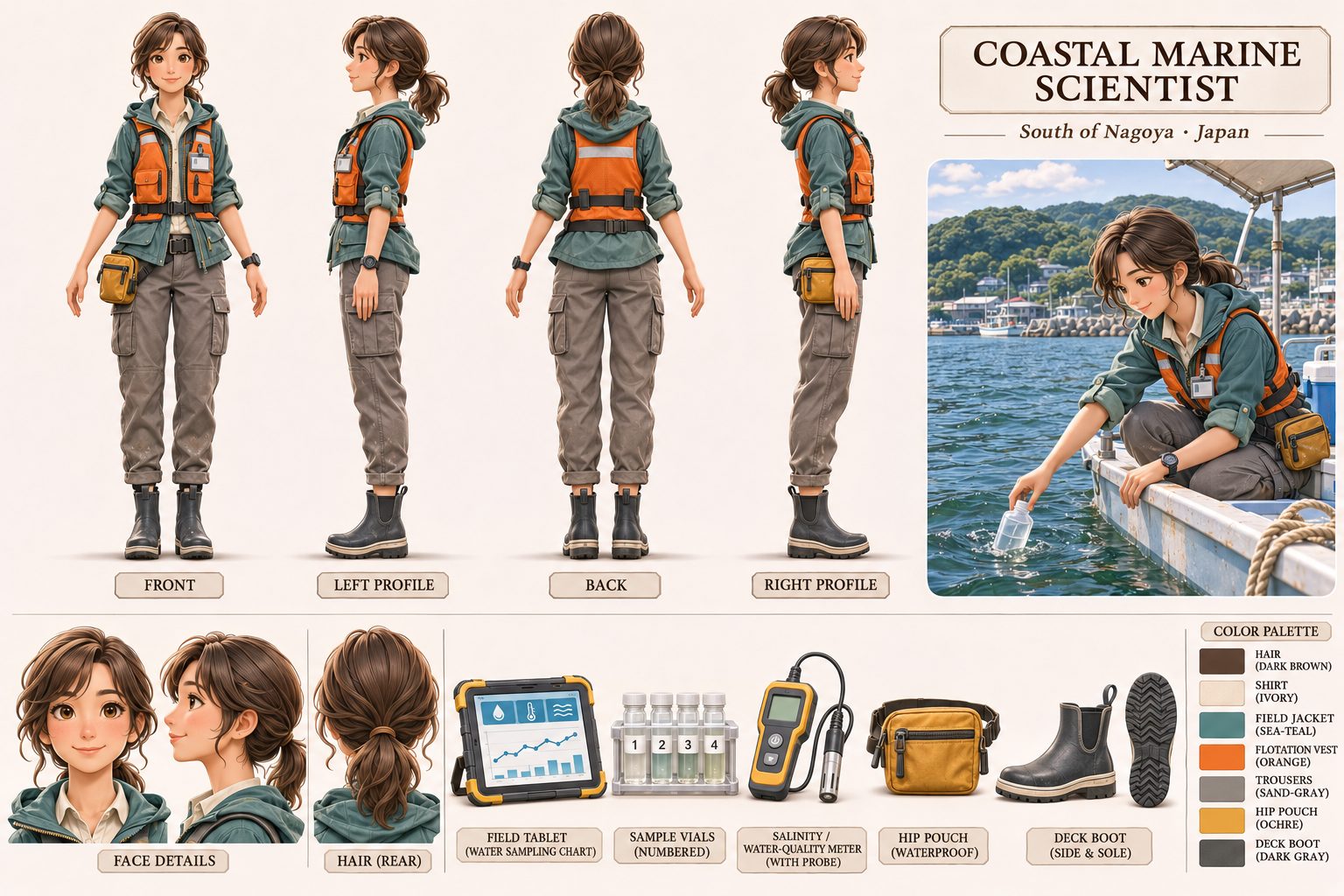
By the evening the cast was real: Mio (from her character sheet), the reef ecologist, the intern, the curator, a teacher and a class of kids, plus the boat, five kinds of coral and Mio's dog Dodo, a Kishu Ken.
What is next
Episode 1, the deep-sea sample: a submersible dive, a wet lab on a research ship, and a microscope station back at the museum. And a museum that finally looks like the future of museums, not a box.
The science in the game is still marked Draft. If you do this work in the field, I would love your eyes on it. Here is how to help.